ServicesRoof Replacement
Roof Replacement in Guthrie
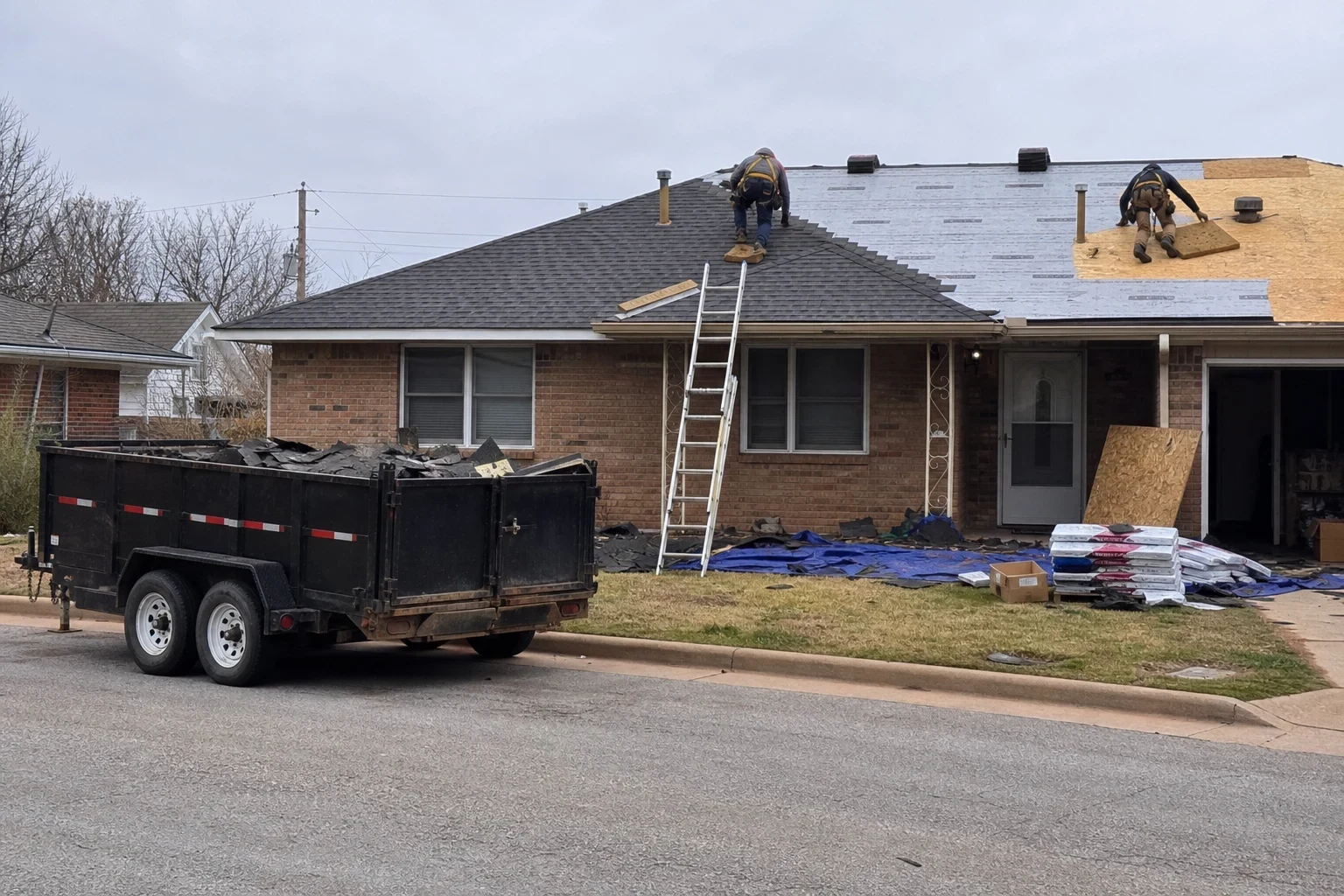
When patches stop holding, a new roof is the calmer choice. We strip the old one down to the deck, fix what we find underneath and build each layer properly. We work around your home the way we would want someone to work around ours.
Knowing when a new roof makes sense
A roof usually wears out slowly. Granules wash off, the seal strips let go, and new leaks show up near the patches from last season. At some point a repair only buys a few more months, and those dollars serve you better as part of a roof that starts fresh.
Our job is to give you an honest read on your roof. When a focused repair will last for years, that is what we recommend, and our roof repair service is the place to start. When the roof has reached the end of its life, we share photos from the inspection and walk you through why a full replacement is the practical choice.
Oklahoma hail and long summer heat wear hard on asphalt, so we pay close attention to the components that take that beating: the underlayment, the flashing, the attic ventilation and the fastening pattern hidden beneath the shingles.
Every layer of your new roof
- Stripped down to bare decking
- The old shingles, underlayment and nails all come off. Laying new material over an old roof conceals problems and shortens the life of the new one.
- Sheathing inspected and repaired
- With the deck exposed, we check every section for rot, softness or boards coming apart. Damaged sheets are swapped out, photographed and listed on your paperwork so the changes are clear.
- Synthetic underlayment and ice and water barrier
- The full deck gets synthetic underlayment. Valleys, eaves and the areas around pipes and vents get a self-sealing barrier, since those are where water most often finds its way in.
- Flashing and ventilation brought up to standard
- Worn chimney, sidewall and pipe flashing is replaced instead of being reused. We also look at intake and exhaust vents, because an overheated attic cooks shingles from below.
- Starter course, field shingles and ridge cap
- Starter strips run along the eaves and rakes, shingles go down following the manufacturer's nailing pattern, and a matching ridge cap gives the roof a clean finished line.
- A tidy property when we leave
- Tarps cover plants and siding while the old roof comes off. At the end we haul everything away and run a magnet across the lawn, flower beds and driveway to catch stray nails.
How to tell a roof has reached the end
Grit collecting at the downspouts
Piles of dark, sandy grit in your gutters or at the bottom of a downspout mean the shingles are shedding their protective granules. Bare asphalt breaks down quickly in hard sun.
Curled or cupped shingles
Edges that turn up, or centers that sink into a shallow dish, show the shingles have dried out. In that shape they catch gusts and rip loose more easily.
Water getting in at several places
One leak can usually be repaired. Multiple leaks, or a leak that returns after each patch, point to a roof that is failing as a whole.
A dipping roofline or spongy decking
A sag along the ridge or deck boards that give underfoot often mean moisture has soaked into the sheathing. It should be dealt with before the damage spreads to the rafters.
Two decades or more on the roof
A standard asphalt roof typically nears the end of its useful life around 20 years, and sooner after several rounds of hail.
How the job runs
- 1
A walk-through and measurements
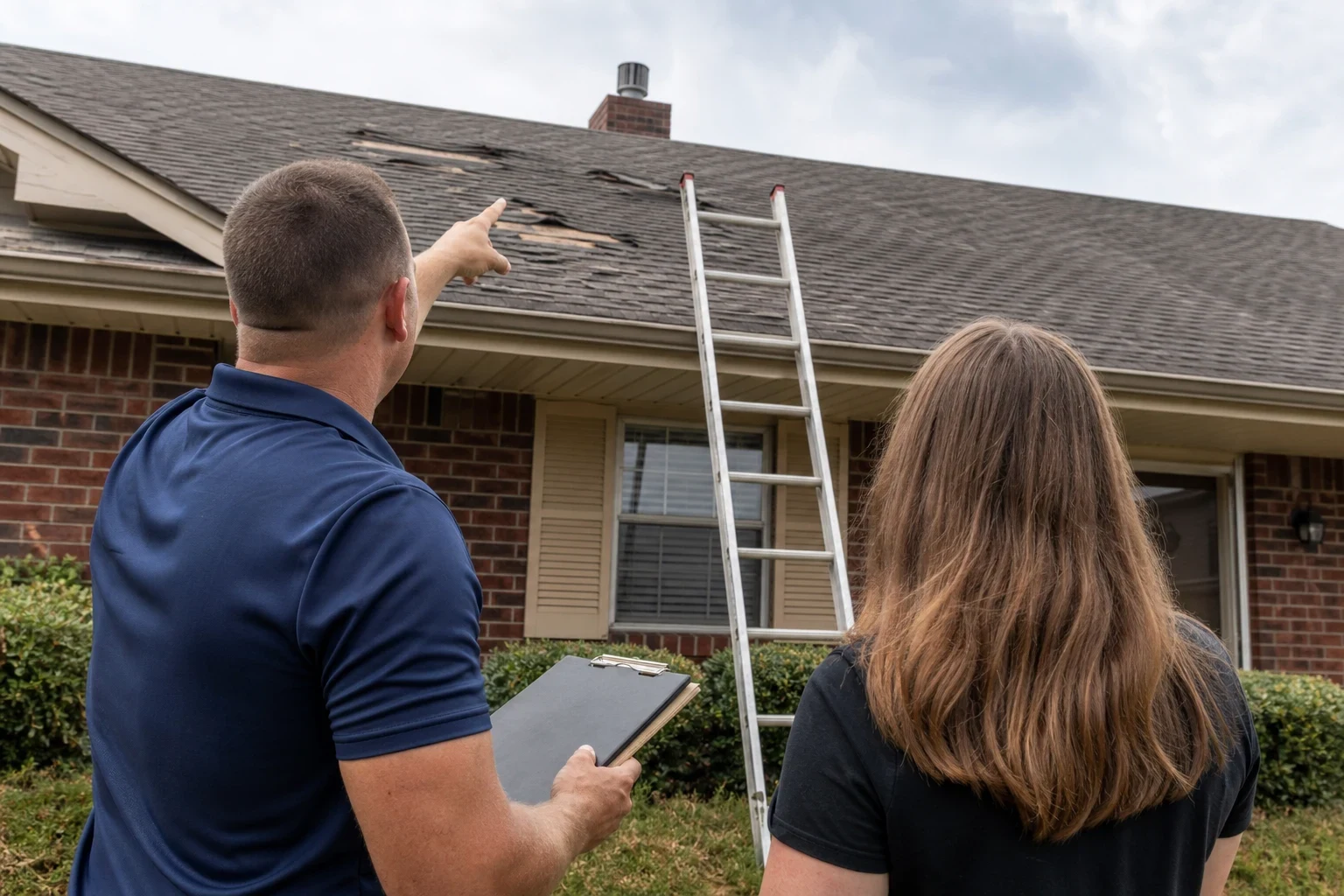
We look over the roof, the attic if you allow it, and the gutters and flashing. You get photos and a straight answer on whether replacement is the right move.
- 2
A written, line-item estimate
Materials, tear-off, a decking allowance and the permit each get their own line. That way you know what every part of the job costs and can weigh other bids on equal terms.
- 3
Scheduling and delivery
We choose a date with a dry forecast and let you know when materials will arrive and where they will be placed. We pull the permit where one is required.
- 4
Tear-off and installation
Most homes are stripped and covered in one day, so the deck never sits open overnight. Larger or steeper roofs may need a second day.
- 5
Final walk with you
We look over the finished roof together, sweep the yard one more time and hand you the paperwork.
What moves the price
Each roof is priced from its own measurements and condition, so we hold off on numbers until we have been up there. The items below are what make one replacement cost more or less than the next. Your estimate will show each of them on its own line.
- Size and pitch
- More squares call for more material and more labor. A steep roof needs extra safety setup, and the crew works it more slowly.
- Layers to remove
- Two old layers take longer to strip and add weight to the disposal load.
- Decking condition
- Rotted sheathing only shows itself once the old roof comes off. Replacement boards are priced per sheet, and we show you every one we swap out.
- Material choice
- Architectural shingles, impact-rated shingles and metal sit at different price points. They also hold up differently when hail and high wind arrive, and we will walk you through that tradeoff.
- Details and access
- Chimneys, skylights, valleys and a tight lot all add time, and so do permit requirements.
Questions about replacing a roof
Something not covered here? (405) 873-6396
How many days will my roof replacement take?
For most homes, tear-off, installation and cleanup fit into one working day. A large, steep or heavily cut-up roof can run into a second day. We give you a realistic schedule once we have measured.
Can you just put new shingles over my old roof?
We advise against it. A second layer traps heat, puts extra weight on the framing and hides any damage in the decking. Taking the old roof off lets us see the boards and repair what needs it.
Will my insurance cover a new roof?
It can, when the damage comes from a covered event like hail. We document what we find and explain how claims usually move along, but the adjuster decides what is covered. Our storm damage repair page has more on hail claims.
Does someone have to stay home while you work?
You are welcome to go about your day. We need clear access to the driveway and yard, and pets are happier indoors with the noise. We talk with you before the crew starts and again once the job is wrapped up.
Is this a good time to replace my gutters too?
If your gutters are dented, sagging away from the fascia or undersized for the roof, handling them during the replacement avoids a separate visit. Sound gutters stay where they are, and we protect them while we work. See our gutters page for more.
Ready to talk about a new roof
Tell us about your roof and what you have noticed. We will set a time to look at it and walk you through the options without pressure.