ServicesCommercial Roof Replacement
Commercial Roof Replacement in Guthrie
When patching no longer holds, we replace low-slope and metal roofs on shops, offices and small commercial buildings. We check what is under the membrane, fix the drainage while the roof is open and plan each section so your business keeps running.
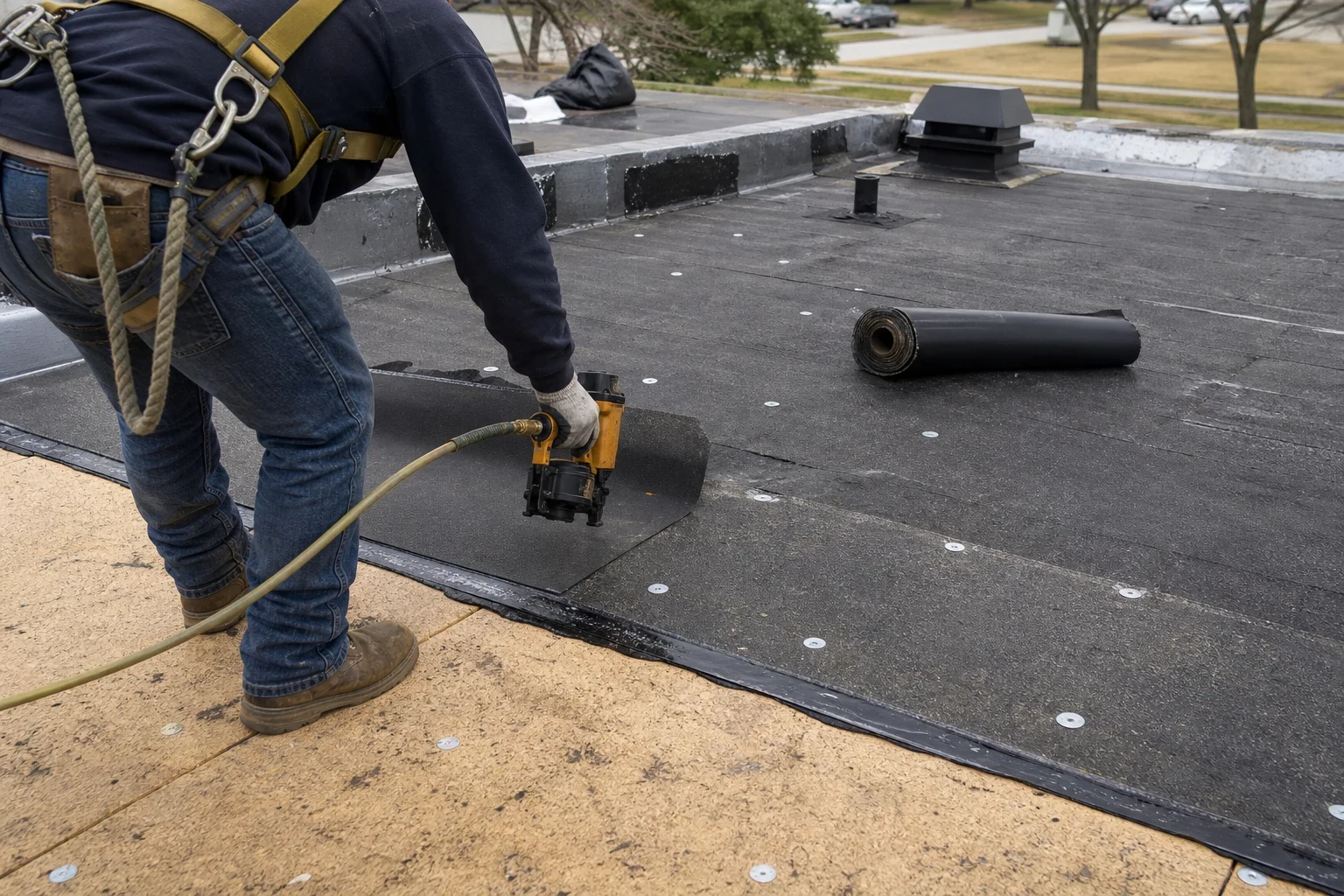
When a new roof is the sensible call
Most commercial roofs fail slowly. A seam opens, water finds the insulation, and the insulation holds it like a sponge long after the rain stops. Repairs can buy time, but once the deck or a large share of the insulation is wet, new patches only move the leak a few feet over.
We treat a commercial building the way we would treat a neighbor's: we tell you plainly whether the roof has years left or whether replacement is the better use of your money. If a repair makes more sense, our commercial roof repair page covers that work. If it is time for a new roof, we explain the membrane options, what the tear-off will uncover and how the job will fit around your tenants, staff and customers.
What a replacement includes
- Core cuts and moisture checks
- Before we price anything, we take small core samples to see how many layers are up there and whether the insulation is dry. That tells us if a full tear-off is needed or if parts of the existing roof can stay.
- Stripping the old roof and fixing the deck
- The crew strips one section at a time to bare structure and seals each one before leaving, so no part of the building sits open overnight. Any rusted steel deck or soft wood sheathing is swapped out before new material goes on.
- Tapered insulation for drainage
- Ponding water shortens the life of any membrane. Where the roof holds water, we add tapered insulation to pitch it toward drains and scuppers.
- Your choice of membrane
- We install TPO, EPDM, modified bitumen and metal. Each handles Oklahoma heat, hail and hard freezes a little differently, and we walk you through the trade-offs for your building and budget.
- Flashing, curbs and edges
- Most leaks start at transitions, not in the field of the roof. We reflash parapet walls, rooftop unit curbs, pipe penetrations and roof edges with new metal and membrane.
- Permit and cleanup
- We pull the city permit, keep the work area and parking lot clear of debris and haul away the old roof when we finish.
Signs your commercial roof is due
Leaks in more than one spot
One leak is a repair. Several leaks across the building usually mean the membrane or the insulation under it has reached the end of its life.
Water that sits for days
Ponds that remain two days after rain point to sagging deck or crushed insulation. Standing water also adds weight and speeds up seam failure.
Blistering, cracking or shrinking
Bubbles in modified bitumen, chalky or cracked TPO and EPDM pulling away from walls are signs of an aging membrane.
Soft spots underfoot
If the roof feels spongy when you walk it, the insulation below is likely wet. Wet insulation no longer insulates, and it rusts or rots the deck beneath it.
Rising energy bills
A roof full of damp insulation lets heat in all summer and out all winter, which shows up on your utility bills.
How the job runs
- 1
Walk the roof together
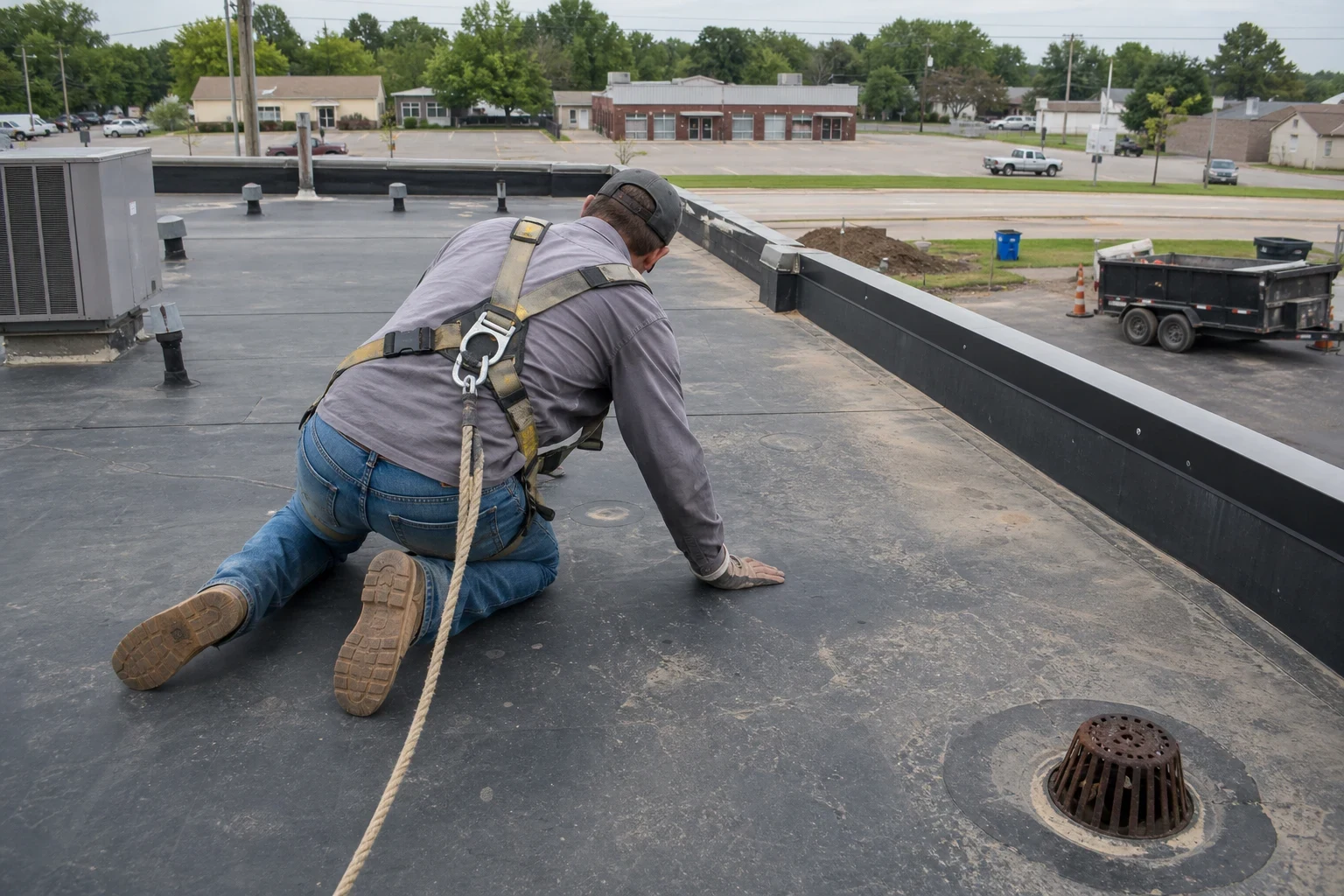
We inspect the roof, take core samples and photograph what we find. You see the same pictures we use to write the scope.
- 2
Written scope and schedule
You get a line-item estimate that names the membrane, insulation, flashing and any deck repair we expect. We agree on start times, crane or lift placement and which areas of the lot we will use.
- 3
Work in dry sections
We tear off only what we can close up the same day. Rooftop units stay connected where possible, and we coordinate with your HVAC contractor when a unit has to be lifted.
- 4
Final walk and handover
Once the city inspection is done, we walk the finished roof with you, clean the site and leave you photos of the completed work.
How we price a commercial roof
Every commercial estimate we write comes from measurements and findings on your own roof, so we don't quote a per-square-foot number over the phone. Core samples settle most of the unknowns before we put a figure in writing. The factors below account for most of the difference from one building to the next.
- Footprint and rooftop layout
- Total area is only part of it. Penetrations, equipment curbs, parapet walls and steps between roof levels all add detail work, and a compact roof packed with units can take longer than a wide, open one.
- How much has to come off
- Code caps the number of roof layers a building can carry. When there are already two, or the existing roof is holding water, we strip it all the way to the deck.
- What we find under the membrane
- Rusted steel deck and soaked insulation mean more material and more labor. The core cuts we take at the start let us account for this in the estimate instead of discovering it mid-job.
- Membrane and insulation selection
- TPO, EPDM, modified bitumen and metal each carry different material costs and install times. Choosing a heavier membrane or adding insulation raises the price and generally gives the roof a longer service life.
- Site access and work hours
- A tight parking lot, the need for a crane, or scheduling tear-off for nights and weekends so your business hours stay quiet will all shift the cost.
Commercial roof replacement questions
Something not covered here? (405) 873-6396
Can my business stay open during the replacement?
In most cases, yes. We work in sections, keep entrances clear and schedule the loudest tear-off work around your busiest hours where we can. If a space truly needs to close for a day, we tell you in advance.
Can you install the new roof over the old one?
Sometimes. If there is only one existing roof and the core samples show dry insulation, a recover can be a sound option. If the old roof is wet or there are already two layers, a full tear-off is the right answer.
Which membrane is best for my building?
It depends on how the roof drains, how much foot traffic it gets and how long you plan to own the building. TPO is common for its reflective surface, EPDM handles temperature swings well and modified bitumen stands up to foot traffic. We explain the options plainly and recommend what fits your situation.
How long does a commercial roof replacement take?
A small building can be done in a few days. Larger roofs, deck repairs or rain delays add time. We give you a working schedule before we start and keep you updated if the weather moves it.
Do you handle the permit?
Yes. We pull the permit with the city and schedule the inspection, so the work is documented when you need it for insurance or a future sale.
Ready to look at your roof?
We will walk the roof, take core samples and give you a clear written scope for replacement or repair. Tell us about your building on a call and we will set a time to come out.