ServicesCommercial Roof Repair
Commercial Roof Repair in Guthrie, OK
We find where water is actually getting into your building, repair it with materials that bond to what is already up there, and keep the work around your business hours. You get a clear explanation, photos of the problem and a roof that stays dry.
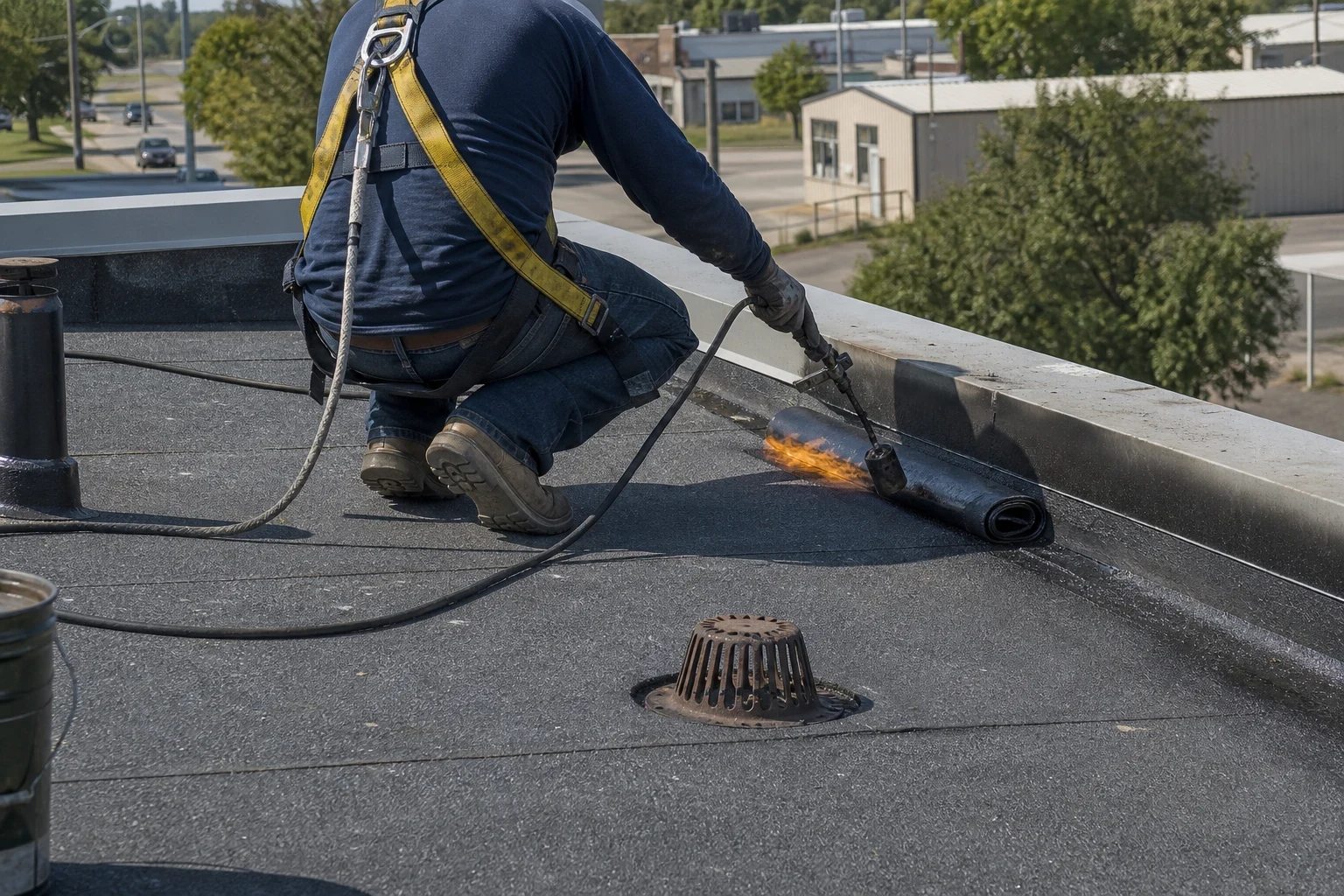
Repairs that fit the roof you already have
Most commercial roofs are flat or low-slope, and they fail differently than a pitched shingle roof. Water sits longer, seams carry more of the load, and a small split near a drain can show up as a ceiling stain thirty feet away. A good repair starts with patient tracing, not a bucket of patching compound.
We work on TPO, EPDM, modified bitumen, built-up and metal panel roofs. Each takes its own repair method: heat-welded patches on TPO, primed and taped seams on EPDM, torch or cold-applied patches on mod-bit, and sealed fasteners and lap seams on metal. Matching the method to the membrane is what makes a repair last.
We treat your building the way we would want a neighbor to treat ours. That means a straight answer when a section has reached the end of its life, and a targeted repair when it has not. If replacement does make more sense, we will explain why and talk you through commercial roof replacement.
What we cover on a commercial repair call
- Tracing the water path
- We start at the spot where water shows inside and work back across the roof to where it actually enters, checking laps, penetrations and drains on the way. Big roofs can take a while to read, and we would rather take that time than patch the wrong place.
- Seam and membrane work
- Punctures, open laps and seams that have shrunk apart get cleaned, primed and patched with a material that matches the existing membrane. A product that will not bond to your roof has no place on it.
- Parapet, curb and boot flashing
- The edges where the roof meets a wall, a rooftop unit or a pipe are common entry points for water. We seal these again or rebuild them, leaving enough give that normal roof movement does not tear them loose.
- Drainage and standing water
- Debris in drains and low spots in the deck can hold water for days. We clear the drains and scuppers, reseat clamping rings, and mark any areas where ponding is wearing down the surface.
- Metal roof repairs
- For metal panel roofs, we swap out fasteners that have backed out or rusted, seal the overlapping seams again and treat surface rust early so it stays small.
- Photos and a written record
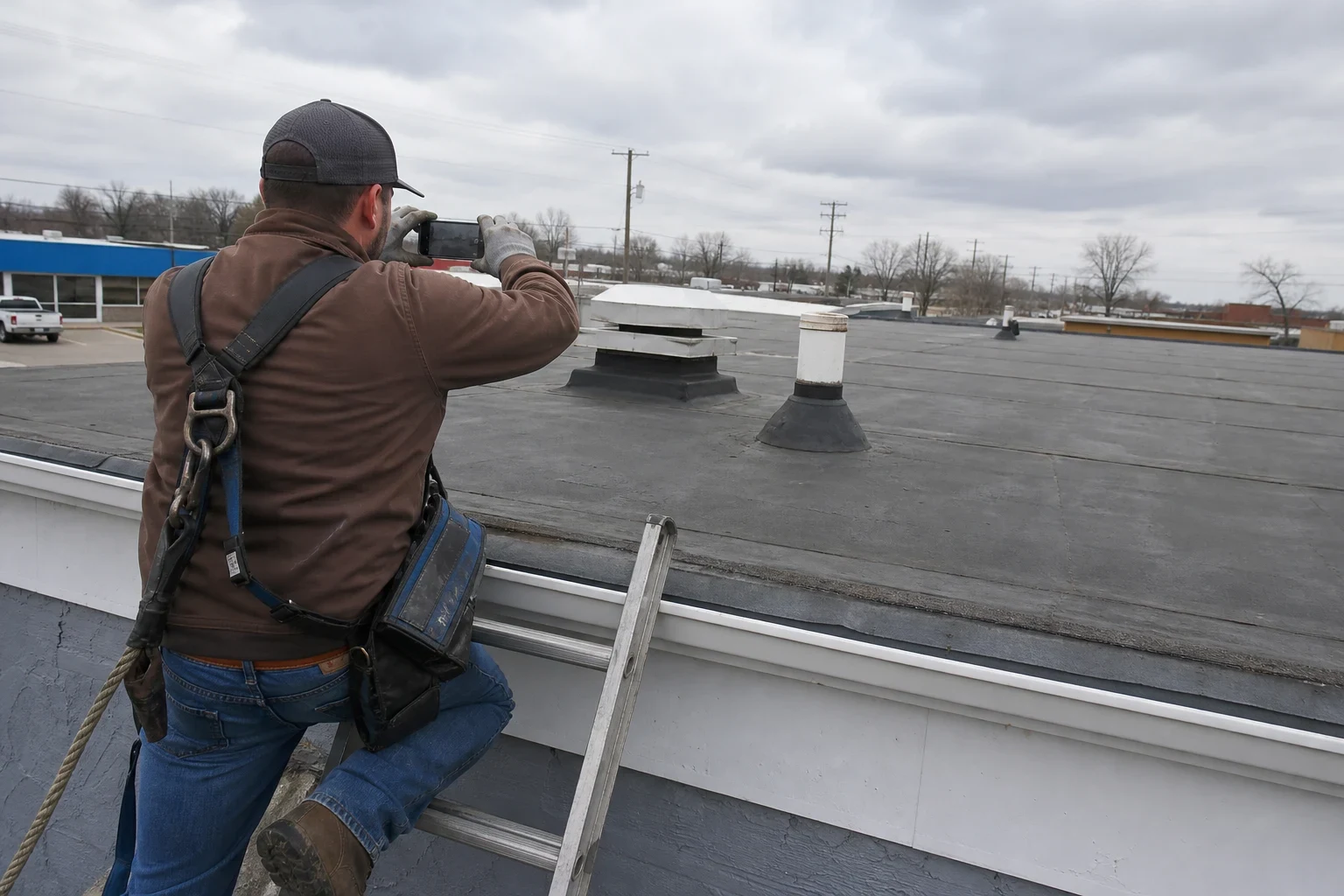
- After the visit you have pictures of the problem and an itemized note of the repair. You or your property manager can see each step that was taken.
When a commercial roof is asking for a repair
Discolored ceiling panels
Brown or yellow marks on drop ceiling tiles are usually the first thing people notice. The water may be entering some distance away, so tracing it sooner keeps the repair smaller.
Puddles that linger
When water is still sitting on the roof a couple of days after rain, the membrane wears faster and the deck carries extra weight.
Bubbled or wrinkled surface
Raised pockets on built-up or mod-bit roofs point to moisture trapped below or adhesive that has let go. Over time those spots split.
Laps loosened by wind
Hard prairie wind pulls at loose edges and seams. After a lap opens, the following storm can push water directly beneath it.
Rust streaks on metal panels
Orange trails running from screw heads mean the washers and fasteners have worn, and each one may be letting water through.
What affects the cost of a commercial repair
Every repair is priced from what we find on the roof, and you get the scope in writing before work starts. A few things move the number more than others.
Roof type and membrane
Heat-welded TPO, adhered EPDM and torch-applied mod-bit each need different materials and equipment.
Size of the damaged area
A single seam is a short job. Widespread seam failure or wet insulation across a section takes more labor and material.
What is underneath
If insulation or decking has stayed wet, it has to be cut out and replaced before the surface repair will hold.
Access and rooftop equipment
Tall buildings, limited ladder points and crowded HVAC curbs add setup time and care.
How a repair day runs
- 1
A conversation first
On the phone we ask about the building, the roof type if you know it, and where water is showing. We then set a visit time that works around your customers or tenants.
- 2
Roof and interior walk
We look at the ceiling inside, then walk the roof and trace the path. You see the photos before any repair begins.
- 3
Clear recommendation
We explain what we would repair, what can wait and what is nearing the end of its life. You decide the scope.
- 4
Careful repair and cleanup
Materials are staged away from entrances, rooftop units are protected, and scraps and fasteners are collected before we leave. Your parking lot and walkways are left as we found them.
Commercial roof repair questions
Can my business stay open during the repair?
In most cases, yes. Nearly all of the work happens on the roof, and we plan staging so entrances and parking stay usable. If a step will be noisy or smell of adhesive, we tell you ahead of time so you can plan around it.
Will you just tell me to replace the whole roof?
No. Many commercial roofs have years left once a few seams, drains or flashings are fixed. We recommend replacement only when the membrane is failing broadly or the insulation is saturated, and we show you photos either way.
Can you repair an older membrane we do not know much about?
Usually. We identify the membrane on site, often from a small sample at an edge, and use a compatible material. If the existing surface is too brittle to bond to, we explain that before starting.
Do you help with insurance claims after hail or wind?
We document the damage with photos and a written description you can share with your insurer. We do not act as your adjuster, but we can explain what we found and meet the adjuster on the roof if that helps. Our storm damage repair page covers this in more detail.
How often should a flat roof be checked?
Twice a year is a good rhythm, once in spring and once in fall, plus a look after any hail. A roof inspection catches open seams and clogged drains while they are still small repairs.
Get the leak traced and the roof dry
Tell us what you are seeing inside the building and what kind of roof you have, if you know. We will set a visit that suits your hours and explain everything we find.